 |
 |
 |
 |
 |
 |
 |
 |
 |
 |
 |
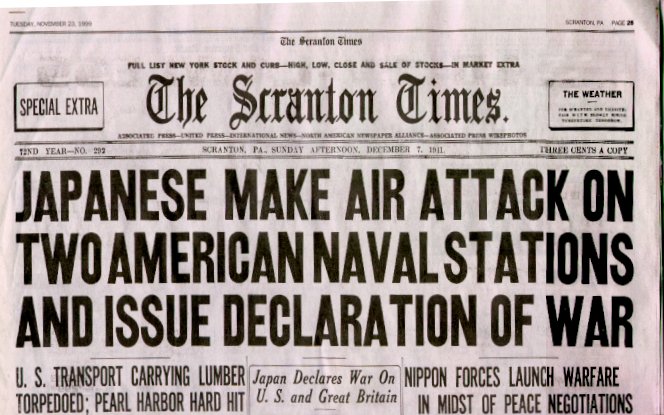
In retrospect, the events leading up to Pearl Harbor and the opening of hostilities with Japan seem clear and inevitable. It is hard now to imagine the shock with which the news hit those who were alive in 1941, though. The last hope of peace or neutrality was shattered completely on that morning.
There are many stories of ships, men and aircraft that could be told of December 7th, 1941. As this is a site about WWI-vintage four stack, flush deck destroyers, this page is about one of them - USS WARD (DD-139).
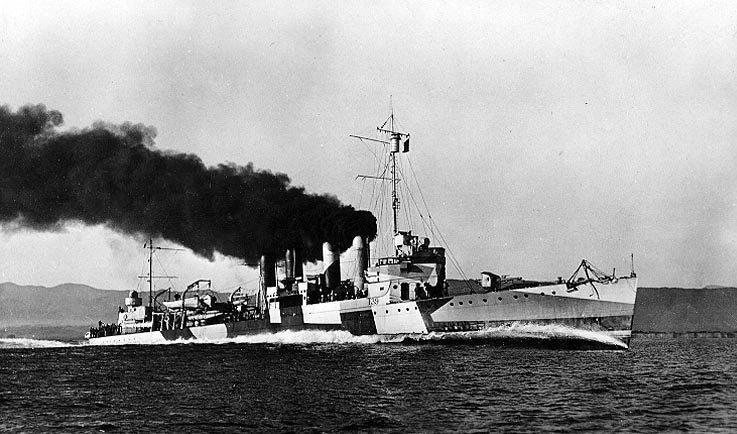
USS WARD at high speed trials in 1918
The United States had imposed an embargo against oil going to Japan in July of that year, and tensions continued to mount from there. In late November Washington dispatched a 'war warning' to the commanders of all forces in the Hawaiian Territories and Phillipine Islands area, to be alert for any possible Japanese aggression. As a result, Admiral H.E. Kimmel, Commander in Chief, Pacific Fleet (CincPac), ordered those Navy vessels in the coastal defense areas to depth charge any suspicious submarine contacts they encountered.
WARD was one of the ships that stood guard over the entrance to Pearl Harbor. In duty rotation with other destroyers, she had just taken up station, doing two mile long figure eights. Her skipper, Lt. William W. Outerbridge, had only assumed command on Friday, Dec. 5th, and had taken her to sea on December 6th for the routine entrance patrol.
On the morning of the 7th, a Sunday, USS ANTARES (AKS-14), the flagship of Training Squadron Eight, had returned from Palmyra Island, towing a target raft. ANTARES anchored near the harbor entrance to wait for a favorable tide, and for the anti-submarine boom net defenses to open. At 0506 WARD exchanged signals with ANTARES as she got underway again. Lookouts on WARD then noticed a small wake astern of ANTARES, between the auxilliary and the raft.
Outerbridge gave the order to go to General Quarters, and WARD charged down on what proved to be a Japanese mini-sub. At first it appeared they may run the target down. The destroyer's Number One 4" gun (forward) fired at 0645, but the shell splashed beyond the little bit of the submarine that was above the surface. As they roared past at 25 knots the Number Three 4" gun above the deckhouse opened fire, placing an accurate shot clear through the conning tower. WARD quickly dropped four depth charges where the sub had disappeared from sight, and this sealed the intruder's fate.
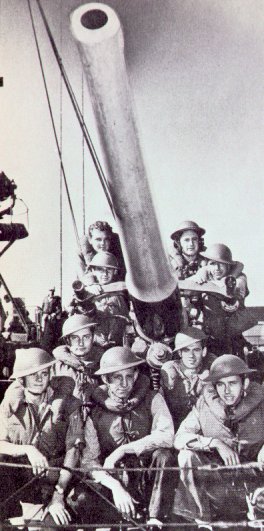
THE NUMBER THREE FOUR INCH GUN CREW OF THE USS WARD
Thus it was that an aging relic from World War One had fired the opening US Navy salvo in the war of the Pacific with the Japanese, and had done so swiftly, surely, accurately and with absolute success. The air raid on Pearl Harbor was still an hour away. It is impossible to know how much damage that small submarine would have done had it been able to sneak into the harbor that morning. Several ships raced out through the channel during the air attack, and had one of them been struck by a torpedo from the sub, the channel could have been blocked, bottling up all the others behind. Thanks to WARD, her new skipper, and her sharp shooting crew, this didn't happen.
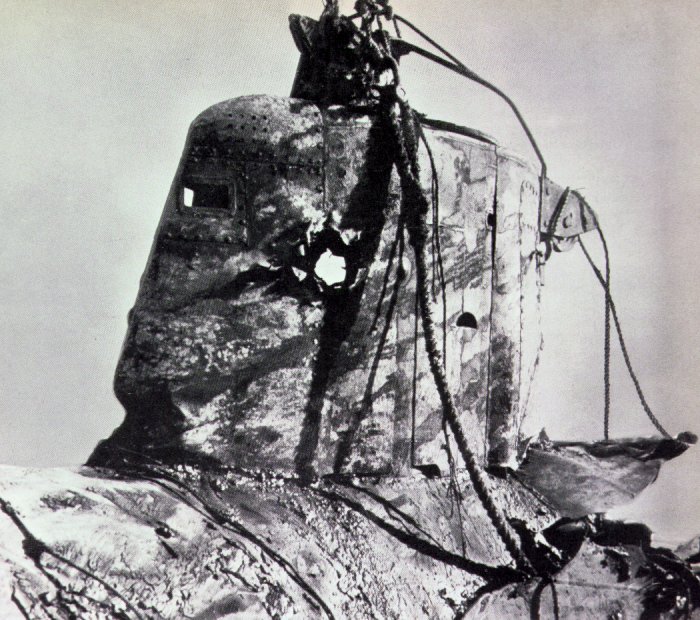
A SIMILAR A-type midget SUB WAS LATER RETRIEVED FROM THE BOTTOM OF PEARL HARBOR WHERE IT HAD PENETRATED AND MADE AN UNSUCCESSFUL ATTACK.
| UPDATE: The submarine USS WARD was attacking that fateful morning has been found! Hawaii Undersea Research Laboratory used a research submarine to locate the sunken submarine and verify that USS WARD did, in fact, sight, hit and sink a Japanese midget sub. For more information and excellent underwater photos, go to their site at http://www.soest.hawaii.edu/HURL/midget.html |
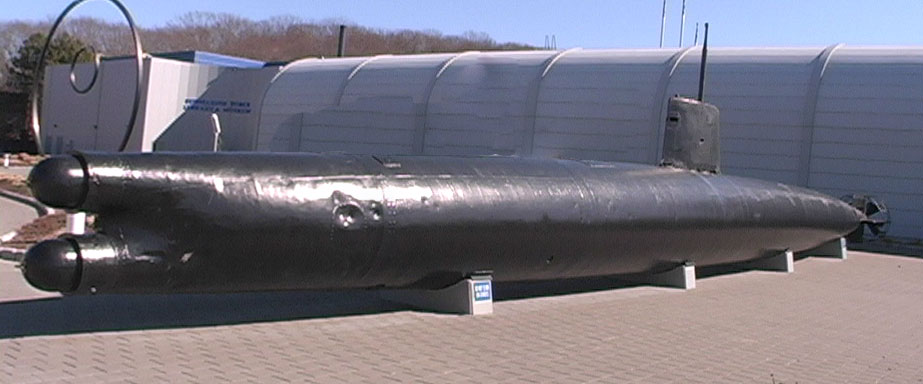
I recently visited the US Navy's Submarine Museum in Groton, Connecticut. There is a Japanese A-type midget sub on display there. It was captured at Guadalcanal, intact. This is an excellent museum to visit. If you're on the East Coast, drop in and check it out!.
The story of the USS WARD and her new Captain, Lt. William W. Outerbridge, could end there. However, history is not stagnant. Ships and men are reassigned, move on, and sometimes meet again years later in far-off places. Thus it was with WARD and Outerbridge.
USS WARD served a while longer as an anti-submarine destroyer, and then was refitted as an APD to transport troops at high speed to remote locations in the Pacific. Redesignated APD-16, she served in many locations throughout the next few years of island-hopping warfare.
Lt. Outerbridge retained command of WARD for a time, and then was reassigned. He later advanced to the rank of Lt.Cdr, and was given command of USS O'BRIEN (DD-725), also operating in the Pacific.
On December 7th, 1944, just three years to the day after the attack on Pearl Harbor, their paths were to cross again, and this time without much joy. WARD was operating as screening patrol between Pomson Island and Leyte when a number of Japanese 'BETTY' bombers attacked her. WARD shot down two, but the third struck her at the waterline forward, and drove one of the aircraft's two engines completely through the hull and out the other side. Gasoline fires erupted, and WARD had to be abandoned. One of the ships that came to her aid was O'BRIEN, with LCDR. OUTERBRIDGE in command. Fire fighting proved fruitless, and the entire crew was finally removed. Surprisingly, only one of WARD's crewman was injured and all made it safely to the attending ships.
With no hope of extinguishing the now raging fires aboard his former command, it fell to Outerbridge to sink WARD with gunfire. WARD sank at 1130 in Ormoc Bay, between Poro Island and Apali Point. Rest in peace, proud and faithful ship. You and your crews have served us well.
William Outerbridge continued his career in the US Navy and retired with the rank of Rear Admiral.
In the town where I grew up, just a block from my house, there was a park with a War Memorial. As part of the site, there were two cannons from old Navy ships. Five Inch, 50 Caliber (In Naval nomenclature, the caliber of a gun is its length in inches, divided by its bore - therefore these guns are 5" bore and 250", or 20'-3" long), these are open-mount guns of the same design as the 4"-50s found on Four Stack destroyers.
I returned recently and took some photos of the guns in the park. Massive pieces of steel and bronze, these cannons are more impressive to me now than when I, as a kid, used them as a jungle gym. My father, by the way, never took us to this part of the park, and rarely drove past it. He never mentioned it, but now I realize it was probably a reminder of things he'd rather forget.
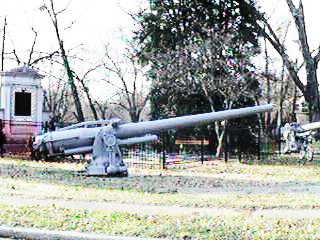
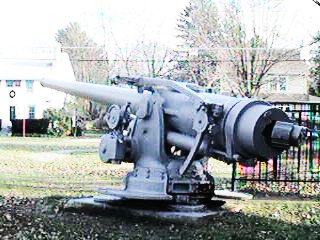
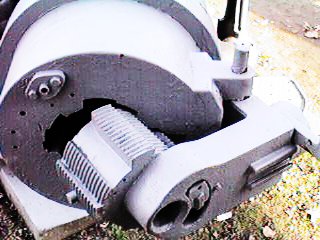
For more information on the USS WARD and her exploits, visit the excellent site at http://www.specwarnet.com/USSWard/
This page, and all contents, are Copyright (C) 1999 by Kenn Anderson,Sr., Scranton, PA. (USA)